Signs of a commercial water loss
- Wet ceiling tiles or sagging drop ceilings
- Water around floor drains, restroom walls or kitchen lines
- Carpet tile edges that curl or darken
- Musty odors in a storeroom or back office
- Sprinkler or HVAC condensate lines that drip
Why business losses need a plan
Town Center shops, restaurants and offices sit under roofs and above basements that take on water in the wet season, and a loss in one tenant space can spread through shared walls. Fast extraction keeps inventory, records and finishes from absorbing moisture.
Business owners often need part of the space back in use quickly, so drying is planned in zones with clear schedules. Readings and photos by zone also help property managers and insurers see what each tenant lost.
What business owners can do first
- Close the main or branch valve that feeds the leak
- Cut power to wet areas if it is safe, and keep staff and customers out
- Move inventory, files and electronics to dry shelves
- Photograph damage, stock and equipment before moving them
- Notify the property manager and your business insurer
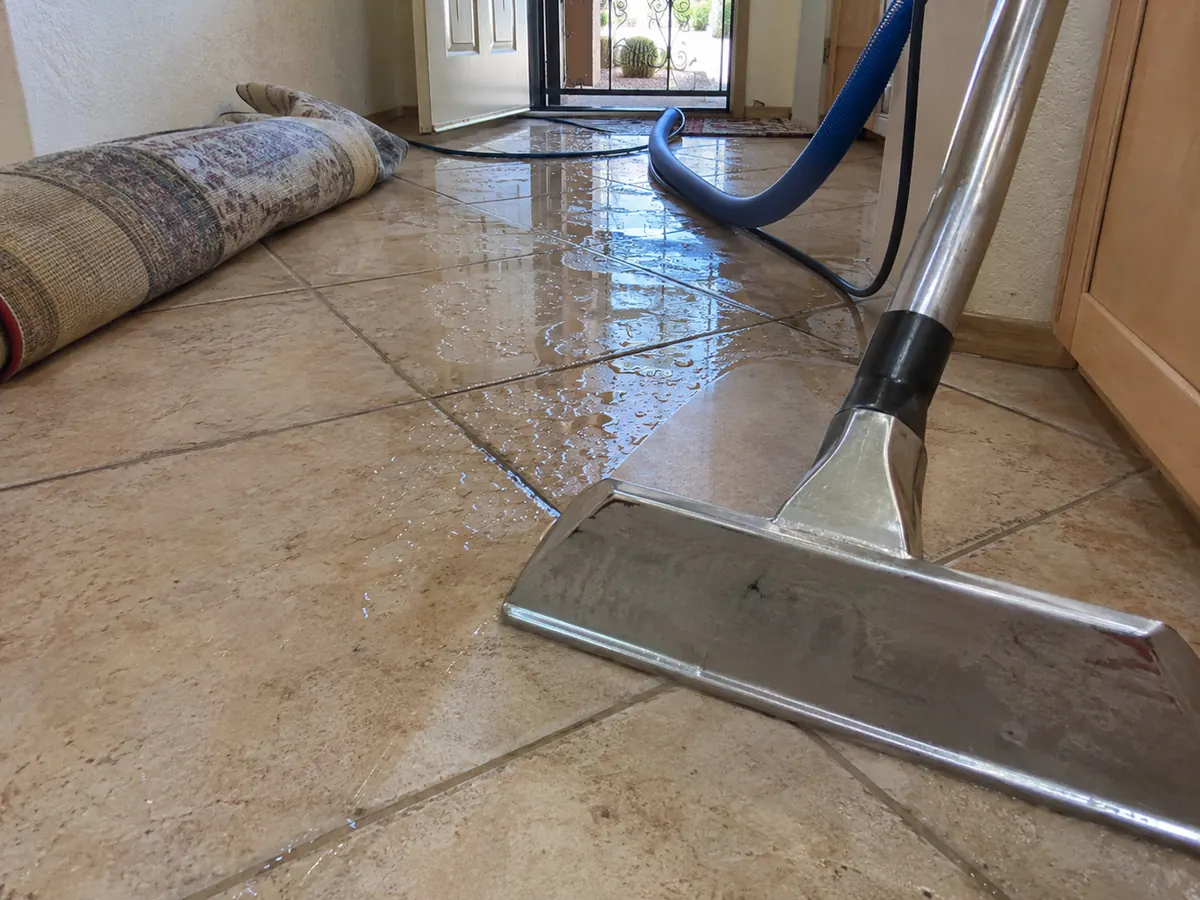
Shared roofs and tenant spaces
In multi-tenant buildings a roof or riser leak can reach several tenants at once. Property managers who keep valve locations, tenant contacts and contractor numbers handy can start extraction while the cause is still being traced.
Tools for this problem
How commercial cleanup works
Stabilize the site
The crew confirms the source is closed, makes electrical areas safe and protects inventory and equipment.
Map the loss by zone
Meters and thermal imaging divide the space into zones, which lets operations resume in dry zones while others are still being treated.
Extract and remove
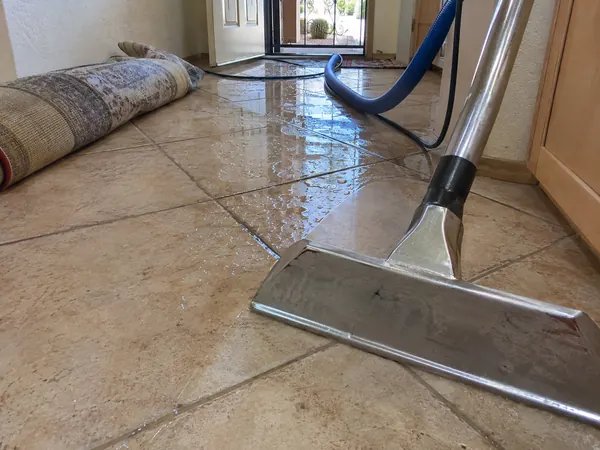
Standing water is removed, and wet ceiling tile, carpet tile and drywall that cannot dry are taken out.
Dry in phases
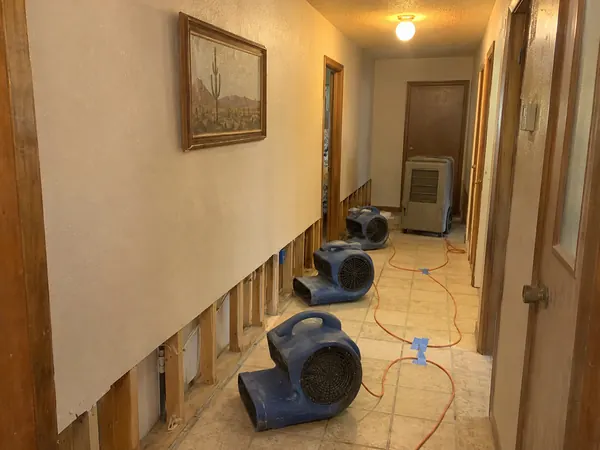
Dehumidifiers and air movers run by zone, with readings logged and equipment moved as zones reach standards.
Report for owner and insurer
Zone reports list readings, photos and equipment days so the property manager and insurer can follow the work.
Problems in commercial spaces
Wet ceiling tile and insulation
You see Tiles sag, stain or fall, and the plenum smells damp
What helps Wet tile and insulation are removed, and the plenum and grid are dried and checked
Water under flooring in a shop
You see Carpet tile lifts or vinyl planks pop at the seams
What helps Flooring is lifted, the slab is dried and tiles that cannot recover are replaced
Kitchen or restroom line failure
You see Water at floor drains or damp walls behind equipment
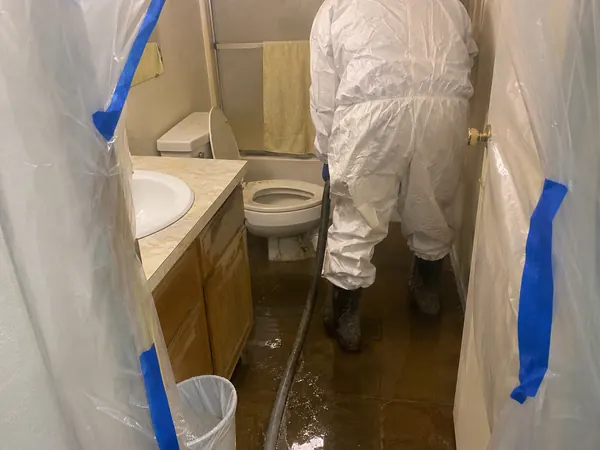
What helps Equipment is moved, walls are opened and dried, and a plumber repairs the line
What commercial service does not cover
We do not: The crew restores the structure, and it does not replace stock, equipment or tenant improvements, or handle business interruption claims.
Call instead: Call your business insurer or broker for stock, equipment and lost income, and a general contractor for tenant improvements.
Typical Commercial Water Damage cost in Mercer Island, WA
Commercial costs follow floor area, the number of zones, after-hours work and the amount of finishes that come out.
| Job type | Typical estimate |
|---|---|
| Small suite or one tenant space | $2,000 to $6,000 |
| Restaurant or retail floor | $6,000 to $25,000 |
| Multi-tenant floor with ceiling work | $25,000 to $90,000 |
| After-hours work premium | 10 to 20 percent more |
Typical estimates, not guaranteed prices. Call for an exact quote.
Questions people ask
[Cost] How much does commercial water damage cleanup cost?
Small suites often run $2,000 to $6,000, restaurants and retail floors $6,000 to $25,000, and multi-tenant floors can pass $25,000. Area, zones and finishes removed explain most of the range.
[Timing] How soon can the business reopen?
Dry zones can reopen quickly, often within a day or two after extraction, while wetter zones need three to five days of drying. A zone plan tells you which areas can return to use first.
[Insurance] What does business insurance usually cover?
Property policies often cover sudden water damage to the building and contents, while business interruption coverage handles lost income if included. Check limits and exclusions for sewer backup and flood with your broker.
[Safety] Is it safe for staff to stay on site?
Dry zones may stay open if power is safe and pathways are clear. Any area with standing water, sewage or electrical exposure should be closed until the crew confirms it is safe.
[Process] Can you work around business hours?
Yes, we can schedule extraction and equipment visits for evenings or weekends when a business needs it. After-hours work carries a premium, and the crew lays out the schedule before starting.