How long tanks usually last
Most tank water heaters are built to last about eight to twelve years, depending on water hardness and maintenance. The date is printed on the rating label, and the first four digits of many serial numbers show the month and year of manufacture.
A tank approaching ten years deserves a closer look at least once a season. Corrosion inside the tank cannot be seen, so age is the most reliable warning an owner has before a leak starts.
Signs the tank is failing
Rust-colored hot water, popping or rumbling noises and moisture at the base of the tank all point to trouble. Small drips at fittings are sometimes fixable, but water coming from the tank body usually means replacement.
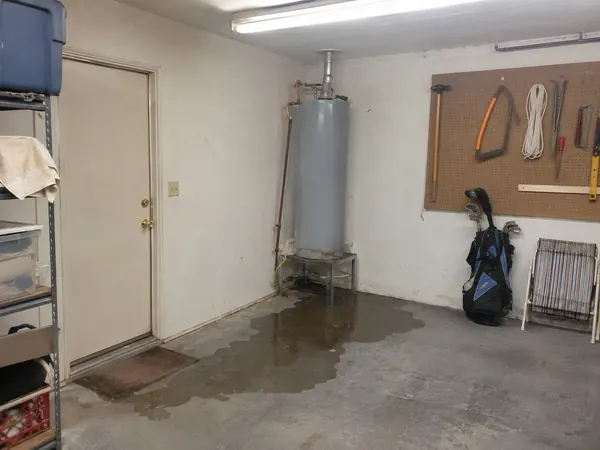
Check the floor around the heater and the drain pan, if one is installed, for stains or standing water. A pan with a drain line that runs outside gives the earliest warning of a slow leak.
What a failure can cost
A tank holds forty to fifty gallons, and a split seam can release most of it quickly. In a garage the water spreads across the slab, while in a closet it can reach flooring and walls in nearby rooms.
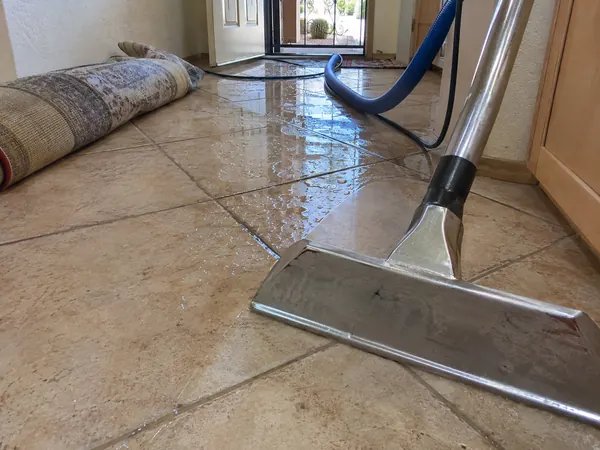
Drying a utility room often costs a few thousand dollars, and finished floors or cabinets nearby push the total higher. Tank replacement is a separate cost that a licensed plumber quotes.
Steps to take before it fails
Know where the cold inlet valve and the electrical or gas shutoff are, and label them. Add a drain pan and, if the heater sits near finished space, consider a leak alarm that sounds when water reaches the floor.
Flush the tank on the maker's schedule, test the pressure relief valve and plan replacement around the ten-year mark. Replacing on your schedule is cheaper than replacing after a flood.
Gas, electric and tankless: what changes
Gas and electric tanks fail in the same way, with rust at the bottom seam letting water escape, so the leak risk is similar. The difference is the shutoff, because a gas unit needs its gas valve closed as well as the cold inlet.
Tankless heaters hold very little water and rarely flood a room, but their fittings and condensate lines can still drip over time. A drip that wets a wall for months causes damage that leak detection and drying has to trace with meters.
Your first hour after a tank failure
Close the cold inlet valve, switch off power or gas, and open a hot tap somewhere upstairs to break the vacuum so the tank stops draining into the house. Then photograph the floor and the label on the tank before anything is moved.
Print the water damage response checklist and keep it near the heater, since the steps are easy to forget when water is running. A crew can start extraction while you call your insurer.
Costs and insurance to expect
A tank replacement is paid to a licensed plumber, while water cleanup is a separate bill that follows square footage and flooring. The pricing page lists typical ranges for appliance leaks and for the drying that follows them.
Many policies cover sudden failure damage but not the age-related wear that caused it. Photographs, the failed part and drying logs make the claim easier to review.
How to decide when to replace
Write the install date on the tank with a marker and set a reminder for year eight. Run the readiness check each autumn to see whether a drain pan, a leak alarm and a labeled shutoff are in place.
If you smell mold near the closet or garage wall after a slow leak, read about mold remediation before repainting. Moisture left in a wall keeps feeding growth that paint hides.
Questions people ask
[Process] Does homeowners insurance cover a failed water heater?
Sudden failures commonly lead to coverage for the resulting water damage, though the heater itself usually is not included. Slow leaks and poor maintenance are often excluded, so check your policy.
[Cost] Should I replace a water heater before it leaks?
Yes, once it is near ten years old or showing rust, noise or moisture at the base. Planned replacement is far cheaper than drying a utility room and replacing damaged flooring and cabinets.